The Indonesia Stock Exchange Composite Index (IHSG) started the trading session on March 11, 2025, with a decline, opening at 6,527, reflecting a bearish sentiment among investors. This drop follows concerns over global economic trends, local policy changes, and currency fluctuations. Market analysts believe that a combination of external pressures and domestic uncertainties has contributed to this downturn.
In this article, we will analyze the key factors influencing the IHSG’s decline, including global market movements, domestic economic indicators, sectoral performances, and investor sentiment. Additionally, we will explore expert predictions and potential strategies for investors to navigate the current market landscape.
IHSG Performance and Market Reaction
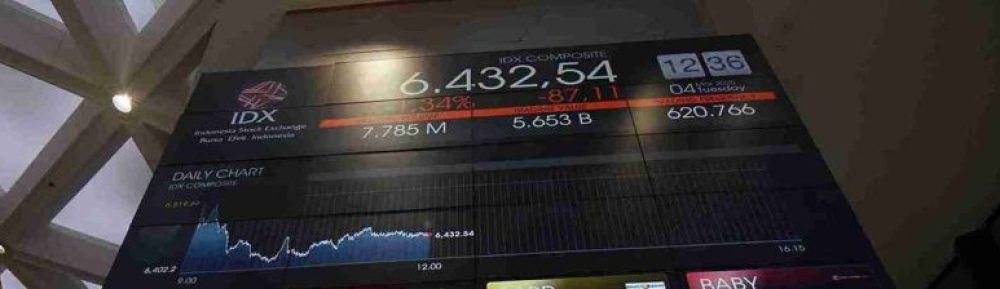
The Indonesian stock market experienced a sharp decline as trading commenced. The IHSG fell 93.71 points, equivalent to a 1.42% drop, bringing it to 6,504.50 within the first few minutes of the session.
Key Market Reactions
- Declining Stocks: Several blue-chip stocks experienced losses, including major banking, consumer, and mining companies.
- Trading Volume: Market activity remained high, with investors closely watching key economic announcements and foreign market trends.
- Foreign Investment Outflow: Analysts noted an increase in foreign capital outflows as global investors reassess risks in emerging markets.
Despite the early decline, some investors anticipate that buying opportunities may arise, particularly for stocks that have seen sharp corrections.
Global Market Influence on IHSG
1. US Market Trends
The IHSG’s decline is partly influenced by negative trends in the US stock market. The Dow Jones Industrial Average fell by 2.08%, the S&P 500 dropped 2.70%, and the Nasdaq Composite declined 4.00%. These losses reflect investor concerns about rising inflation, potential interest rate hikes, and global economic slowdown risks.
2. Asian Markets and Regional Impact
Other Asian markets also opened lower, contributing to negative sentiment in Indonesia:
- The Nikkei 225 in Japan saw a 1.5% decline.
- Hong Kong’s Hang Seng Index lost 2.1% in early trading.
- Singapore’s Straits Times Index showed minor losses, down 0.8%.
These regional losses indicate that broader macroeconomic concerns are influencing investor confidence in Asia, including Indonesia.
Domestic Economic Factors Affecting IHSG
1. Government Policies and Market Uncertainty
One of the key reasons for today’s decline is the Indonesian government’s proposal to increase royalties on coal and mineral exports. This policy change has raised concerns among investors, particularly those involved in the mining sector, which plays a significant role in the Indonesian economy.
Additionally, regulatory adjustments related to taxation and interest rate policies have further contributed to uncertainty in the market.
2. Indonesian Rupiah Depreciation
The rupiah weakened to the 16,400 range against the US dollar, adding another layer of pressure on the market. A weaker currency generally affects foreign investments and increases import costs, potentially impacting corporate earnings.
3. Inflation and GDP Growth
Indonesia’s latest inflation data suggests a year-on-year inflation rate of 3.7%, slightly higher than expected. Slower GDP growth projections have also led investors to adopt a more cautious approach, waiting for further signals from the government and central bank.
Sectoral Performance and Key Stocks
1. Best-Performing Sectors
Despite the overall market downturn, a few sectors showed resilience:
- Technology: Some tech stocks remained stable as investors saw long-term growth potential.
- Consumer Goods: A few consumer-focused companies showed gains due to strong domestic demand.
2. Worst-Performing Sectors
- Mining & Energy: The government’s proposed tax increases led to a decline in mining stocks.
- Financials: Major banks faced selling pressure as investors reacted to macroeconomic uncertainties.
3. Notable Stock Movements
Some of the most affected stocks included:
- BBRI (Bank Rakyat Indonesia) – Down 2.1%
- ASII (Astra International) – Declined 3.0%
- PTBA (Bukit Asam) – Dropped 4.5% due to mining sector concerns
Investor Sentiment and Market Strategies
1. Foreign Investor Reactions
Many foreign investors have reduced their exposure to Indonesian equities, shifting capital toward safer assets such as US Treasury bonds. This trend has contributed to additional market volatility.
2. Local Investor Strategies
For domestic investors, analysts suggest the following strategies:
- Defensive Stocks: Investing in stable, dividend-yielding stocks.
- Sector Rotation: Shifting focus to technology and consumer goods.
- Wait-and-See Approach: Monitoring government policies before making significant investment decisions.
Expert Predictions and Future Outlook
1. Will the IHSG Recover?
Market analysts at MNC Sekuritas predict that IHSG may test resistance levels between 6,686 and 6,762 if market conditions stabilize. However, further declines could occur if negative sentiment persists.
2. Key Factors to Watch
- Bank Indonesia’s next monetary policy announcement
- US Federal Reserve interest rate decisions
- Commodity price trends (coal, palm oil, nickel, etc.)
3. Market Opportunities
Despite the current downturn, long-term investors may find opportunities in sectors that remain strong, such as technology and consumer goods.
Conclusion
The IHSG opened lower at 6,527, reflecting a combination of global market pressures, domestic policy changes, and currency depreciation. While uncertainties persist, investors should remain vigilant, monitor economic trends, and adjust their strategies accordingly.
As market conditions evolve, the potential for recovery remains, particularly if government policies stabilize and investor confidence returns.